
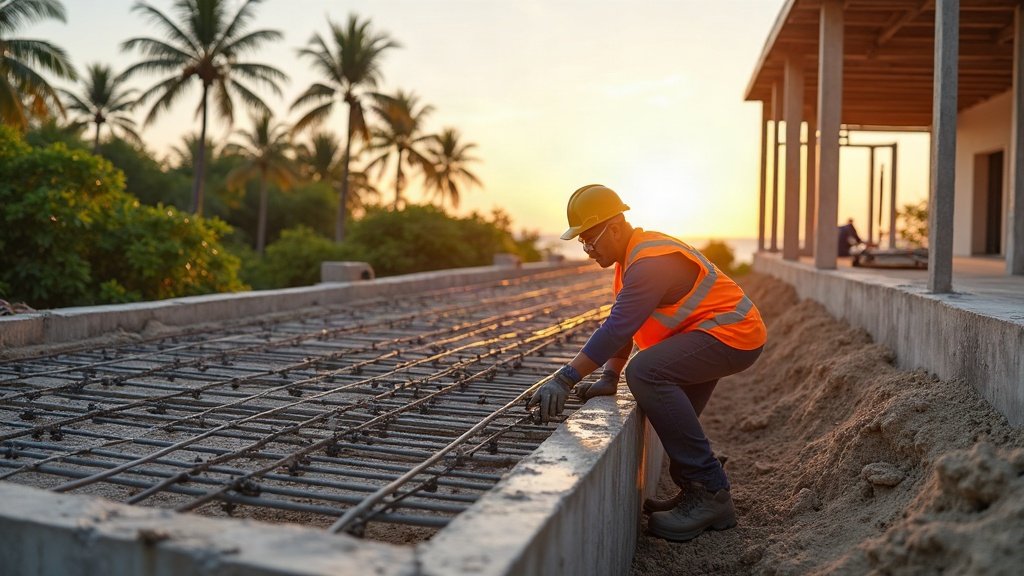
Building Concrete Foundations in Cayman’s Challenging Environment: A Guide for Property Owners and Developers
Concrete foundations are the literal bedrock of any construction project, yet they remain one of the most overlooked aspects of building planning in the Cayman Islands. Whether you’re constructing a new residential home, expanding a commercial property, or developing a multi-unit complex, the quality of your foundation directly determines the longevity, stability and safety of your entire structure. In our tropical Caribbean climate—characterized by high humidity, saltwater proximity, intense UV exposure and the ever-present threat of hurricane season—concrete foundations face unique stresses that demand specialized knowledge and proven techniques.
Many property owners and developers underestimate the complexity of foundation work in the Cayman Islands. Poor foundation design or installation doesn’t just compromise structural integrity; it can lead to costly repairs, insurance complications, regulatory non-compliance and even project abandonment. The good news is that with the right planning, material selection and construction methodology, you can build foundations that withstand decades of Caribbean weather and perform reliably throughout their lifespan.
This guide explores best practices for concrete foundation construction tailored to the Cayman Islands context, helping you make informed decisions that protect your investment and meet all local building regulations.
What Concrete Foundations Are and Why They Matter in the Cayman Islands
A concrete foundation is the structural system that transfers the weight of your building safely into the ground below. It serves as the interface between your structure and the earth, distributing loads evenly and preventing settling, shifting or collapse. In the Cayman Islands, foundations must contend with several environmental factors that mainland construction rarely faces.
Our islands’ limestone and coral-based geology, combined with high water tables and salt-laden air, creates an aggressive environment for concrete. Saltwater intrusion accelerates corrosion of reinforcement steel, while moisture penetration weakens concrete matrices over time. Hurricane-force winds and storm surge generate lateral pressures that demand foundations engineered for extreme loading. Additionally, the Cayman Islands Building Code and Planning Department requirements mandate specific design standards for foundations in our high-risk hurricane zone, making professional engineering and compliance non-negotiable.
Whether your project sits near the coast or inland, a properly constructed foundation accounts for local soil conditions, water management, material durability and regulatory requirements specific to our jurisdiction.
Key Benefits of Proper Concrete Foundation Construction
- Structural Stability: A well-engineered foundation prevents differential settling, cracking and structural failure, ensuring your building remains safe and usable for decades.
- Hurricane and Storm Resilience: Foundations designed for Cayman’s wind and water pressures keep your structure anchored during severe weather events.
- Corrosion Protection: Using marine-grade concrete, proper waterproofing and reinforcement design extends foundation life in our corrosive salt-air environment.
- Cost Savings Over Time: Investing upfront in quality foundation work prevents expensive remedial repairs, foundation underpinning and structural restoration later.
- Regulatory Compliance: Meeting Cayman Islands Building Code standards ensures your project passes inspection, secures insurance coverage and maintains property value.
- Enhanced Property Value: Buyers and tenants recognize the value of a solid, code-compliant foundation, supporting your asset’s marketability and resale potential.
Best Practices and Standards for Foundation Construction in the Cayman Islands
- Conduct Professional Geotechnical Investigation: Before any foundation work begins, commission a soil and geological assessment. This identifies soil bearing capacity, water table depth, subsurface conditions and load-carrying potential specific to your site. This step is essential for designing an appropriate foundation type and depth.
- Engage a Licensed Structural Engineer: All foundation designs must be prepared by a professional engineer registered to practice in the Cayman Islands. Engineering drawings must clearly address hurricane loads, wind pressures and local building code requirements.
- Specify Marine-Grade Concrete and Reinforcement: Use concrete mixes with low water-to-cement ratios, air entrainment and supplementary cementitious materials to resist salt intrusion and moisture penetration. Select epoxy-coated or stainless steel reinforcement in marine environments.
- Implement Comprehensive Waterproofing: Install moisture barriers, drainage systems and sealants to prevent water ingress into foundation elements. Proper drainage around the perimeter is critical in Cayman’s high-humidity climate.
- Maintain Strict Quality Control During Installation: Concrete placement, curing and finishing must follow industry standards and professional oversight. Poor workmanship at the foundation stage cannot be corrected later.
- Ensure Proper Anchoring for Wind Resistance: Foundations must be designed with adequate embedment depth and anchor bolt specifications to transfer hurricane forces safely into the ground.
Common Mistakes and How to Avoid Them
- Skipping the Geotechnical Report: Proceeding without professional soil analysis often leads to undersized or inappropriately designed foundations. Always invest in a site investigation before engineering begins.
- Using Standard Concrete in Marine Environments: Regular concrete degrades rapidly in salty, humid conditions. Specify high-performance, low-permeability concrete formulations explicitly suited to Caribbean coastal exposure.
- Inadequate Reinforcement Corrosion Protection: Uncoated steel reinforcement will corrode in salt air, eventually compromising structural capacity. Use protected reinforcement or stainless alternatives, especially within 500 metres of the shoreline.
- Poor Drainage and Moisture Management: Foundations that trap water invite deterioration and reduce lifespan. Ensure perimeter drainage, proper grading and below-grade waterproofing are installed and maintained.
- Cutting Corners on Concrete Curing: Rushing the curing process weakens concrete strength and durability. Allow adequate time for proper hydration, especially in high-temperature Caribbean conditions.
- Neglecting Inspection and Documentation: Failing to have foundations inspected and certified before backfill creates liability and compliance risks. Maintain full documentation of materials, testing and inspections.
Verification Checklist for Your Foundation Project
- Geotechnical investigation completed by a qualified professional, with findings documented and approved by your engineer.
- Foundation design prepared by a Cayman Islands licensed structural engineer, incorporating local building code and hurricane design requirements.
- Concrete mix design specified for marine or high-moisture exposure, with testing certificates confirming strength and durability specifications.
- Reinforcement corrosion protection plan in place, including material type, coating specifications and placement verification.
- Waterproofing and drainage systems inspected and approved before backfill and further construction proceeds.
- All foundation inspection reports, material certifications and as-built documentation archived for future reference and insurance purposes.
Applications and Use Cases in the Cayman Islands
- Residential Developments: Single-family homes and residential complexes require foundations engineered for hurricane loads and salt-air durability, with proper moisture barriers to protect interior spaces.
- Commercial and Retail Properties: Multi-story office buildings and shopping centres demand deeper investigations into soil capacity and sophisticated foundation systems capable of supporting heavy loads.
- Hospitality and Resort Construction: Hotels and vacation properties near the coast face maximum salt exposure and wind pressures, requiring premium foundation materials and advanced waterproofing.
- Industrial and Warehouse Facilities: Heavy equipment and storage structures need foundations designed for concentrated loads and long-term durability in our harsh environment.
- Infrastructure and Government Projects: Public buildings and utilities must exceed standard requirements, incorporating resilience planning and extended service life expectations.
How J&R Construction Approaches Foundation Excellence
At J&R Construction Ltd., we understand that foundations are not areas for shortcuts or compromise. Our team brings decades of family-led expertise in navigating the unique challenges of building in the Cayman Islands. We work closely with licensed structural engineers, conduct thorough site investigations and specify materials and methods proven to perform in our tropical, hurricane-prone environment. From residential renovations to large-scale commercial projects, we treat every foundation with the rigour and attention it deserves.
Our commitment to quality means engaging the right professionals from the start, investing in proper planning and materials, and maintaining strict oversight during construction. We’re not just building foundations; we’re building confidence—ensuring our clients understand exactly what they’re getting and why it matters for their long-term investment.
Conclusion
Your foundation is too important to leave to chance or cut-rate contractors. In the Cayman Islands, where weather, geology and salt air present constant challenges, a professionally engineered, properly constructed foundation is your best defence against costly failures and premature deterioration. If you’re planning any construction project—whether new build, expansion or renovation—make foundation excellence your first priority.
Contact J&R Construction Ltd. today to discuss your foundation requirements with experienced professionals who know exactly how to build for Cayman’s demanding environment. Let’s ensure your project starts on solid ground.
Leave a Reply