
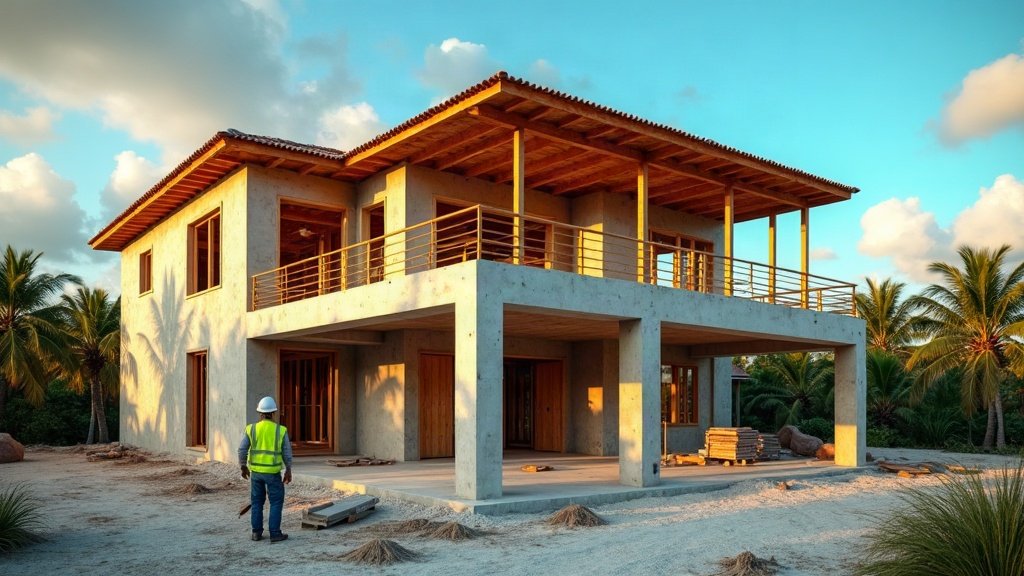
Understanding Residential Construction Costs in the Cayman Islands: A Complete Guide for Property Owners
Building or renovating a home in the Cayman Islands requires careful financial planning from the outset. Unlike mainland markets, residential construction costs here are shaped by unique local factors: import duties on materials, the logistics of island supply chains, compliance with the Cayman Islands Building Code, and the structural demands imposed by our tropical climate and hurricane season. Many property owners discover too late that initial budget estimates fall short once they account for these realities, leading to project delays, compromised quality, or both.
Understanding what drives construction costs in our jurisdiction is not merely an accounting exercise—it directly affects the timeline, quality and long-term durability of your investment. Whether you are a first-time homeowner, an experienced investor, or a developer planning multiple units, transparent cost awareness helps you make informed decisions and partner with contractors who provide genuine value rather than false economy.
This guide walks you through the principal cost drivers affecting residential construction in the Cayman Islands, explains how to evaluate budgets realistically, and shares proven strategies to protect your investment without compromising on quality or safety standards.
What Residential Construction Costs Encompass and Why They Matter Here
Residential construction costs represent the total financial investment required to build or substantially renovate a home, from land preparation and foundation work through to final finishes and fixtures. In the Cayman Islands, these costs are structured across labour, materials, permits, contingencies and project management—but each category carries island-specific premiums that mainland builders and property owners may not encounter.
Our geographical location in the Caribbean means that most building materials are imported. Shipping costs, customs duties, handling fees and longer lead times all compound the base price of concrete, steel, lumber, electrical systems and finishes. Salt air corrosion, high humidity and hurricane-force winds also require upgraded material specifications and specialized installation techniques that add both material and labour expense. Add to this the requirement for compliance with local planning and building regulations, environmental assessments for certain projects, and the need for cyclone-resistant design standards, and the cost picture becomes substantially different from what you might budget if building on the US mainland or in a temperate climate.
Understanding these drivers prevents the common shock of cost overruns and helps you allocate your budget strategically across the elements that matter most to your home’s durability, safety and resale value.
Key Benefits of Understanding Your True Construction Costs
- Realistic budgeting: Accurate cost knowledge means you can set a project budget that accounts for island premiums and avoids the financial strain of unexpected expenses mid-project.
- Better contractor selection: When you understand cost components, you can evaluate quotes more critically and identify contractors who provide transparent, honest estimates rather than dangerously low bids that lead to corner-cutting.
- Quality assurance: Knowing where money should be spent—on hurricane-resistant framing, salt-resistant hardware, proper ventilation systems—helps you prioritize durability over cosmetic shortcuts.
- Timeline confidence: Understanding material lead times and local supply chains means fewer project delays and better coordination with your contractor.
- Resale value protection: Homes built with appropriate specifications for our climate command stronger market prices and attract serious buyers who understand long-term maintenance costs.
- Regulatory compliance: Transparent cost planning includes budgets for permits, inspections and compliance work, reducing the risk of fines, enforcement action or the need to remediate substandard work.
Best Practices and Standards in the Cayman Islands
- Align your budget with local building codes: The Cayman Islands Building Code and Planning Department requirements mandate specific standards for structural design, wind resistance, electrical systems, plumbing and safety. Budget for these requirements from day one; treating them as optional or deferrable invites cost penalties and project complications.
- Include a realistic contingency reserve: Best practice in our market is to reserve 10–15% of your total project budget for unforeseen costs. This is not pessimism; it reflects the reality of island projects where material shortages, weather delays and scope clarifications regularly occur.
- Verify material sourcing and lead times: Work with your contractor to confirm shipping schedules for critical materials. Long-lead items such as custom windows, specialized HVAC systems and architectural elements should be ordered early to prevent cascade delays.
- Specify hurricane and corrosion-resistant materials upfront: Do not treat salt-resistant hardware, impact-resistant glazing and reinforced framing as upgrades; they are baseline requirements. Including them in the initial budget prevents costly retrofits.
- Obtain detailed, itemized quotes: Require your contractor to break down costs by trade, material type and labour category. This transparency allows you to make informed decisions about where to invest and where minor adjustments might be appropriate.
- Establish a clear change order process: Document how any scope changes will be priced and approved. This protects both you and your contractor and prevents disputes over cost additions.
Common Mistakes and How to Avoid Them
- Underestimating import and logistics costs: Many first-time builders assume mainland price lists apply directly; they do not. Factor in 25–40% additional cost for imported materials when comparing estimates. Ask your contractor to provide a detailed materials sourcing plan with confirmed pricing.
- Deferring structural upgrades to save money: Choosing standard framing instead of hurricane-reinforced construction, or cheap fasteners that corrode quickly, creates future liabilities that cost far more to remedy. Invest in appropriate specifications from the start.
- Ignoring permit and inspection timelines: The Planning Department and Building Control Authority review periods can extend project schedules. Budget time and modest fees for these processes; cutting corners here risks project shutdown and remedial costs.
- Hiring the lowest bidder without verification: A quote significantly below market rates often signals either inexperience, corner-cutting or omitted costs. Always check references, verify licensing and insurance, and understand what is actually included in the price.
- Overlooking maintenance costs in climate-sensitive systems: Air conditioning, corrosion-prone metals and moisture-sensitive materials require specialized maintenance. Budget for these ongoing costs, and ensure your initial construction includes adequate ventilation, drainage and protection.
Verification Checklist
- Confirm that all quotes include costs for Planning Department and Building Control Authority approvals, permits and inspections.
- Request a detailed materials list with sourcing location, shipping time and any duty or import costs clearly itemized.
- Verify that your contractor is licensed, insured and can provide recent local project references.
- Ensure your budget includes a documented contingency reserve of at least 10% and a clear change order approval process.
- Confirm that structural and weather-resistance specifications meet or exceed the Cayman Islands Building Code requirements for your property’s location.
- Review the project schedule and identify any long-lead materials that could delay construction if delayed in shipping.
Applications and Use Cases
- First-time homeowners: New buyers often budget based on comparable properties in other jurisdictions. Understanding local cost drivers prevents financial overextension and ensures the home is built to standards that protect your investment against hurricane damage, corrosion and humidity-related deterioration.
- Residential renovations and extensions: Adding a second storey or renovating an older home requires compliance with current codes and often reveals hidden costs related to existing structure, drainage and utility upgrades. Accurate cost forecasting prevents budget crises mid-project.
- Rental property investors: Owners of investment homes must factor construction costs into return-on-investment calculations. Understanding true costs, including cyclone-resistant design and corrosion-resistant materials, helps you price rental rates appropriately and plan long-term maintenance reserves.
- Commercial and multi-unit developers: Developers planning apartment complexes, townhouse communities or commercial properties benefit from economies of scale but must account for increased complexity in permitting, design coordination and material procurement across multiple units.
- Vacation rental properties: Short-term rental homes must meet higher finish standards and durability requirements. Budget accordingly for premium materials, efficient systems and maintenance-friendly design.
How J&R Construction Approaches Residential Cost Management
At J&R Construction, we have built our reputation on transparent, honest cost planning that reflects the real conditions of building in the Cayman Islands. Our approach begins with a detailed site assessment, a thorough review of your plans against the Cayman Islands Building Code, and early engagement with the Planning Department to confirm requirements and timelines. We provide itemized, material-specific quotes that account for import costs, lead times and island logistics, and we build in realistic contingency reserves so you are never ambushed by hidden costs.
Our team leverages established supplier relationships, competitive material sourcing and efficient labour scheduling to deliver fair pricing without cutting corners on quality or safety. We understand that your home is one of the most significant investments you will make, and we treat cost management as a core part of our professional responsibility to you. From initial estimate through final handover, we maintain transparent communication about costs, schedule any changes through a formal process, and deliver homes that are built to last in our unique Caribbean environment.
Conclusion
Residential construction costs in the Cayman Islands are shaped by local supply chains, climatic demands, regulatory standards and the geographic realities of island life. By understanding these cost drivers, obtaining transparent quotes, and planning for realistic contingencies, you protect your investment and ensure your home is built to endure. The cheapest estimate is rarely the best value; the best value comes from working with experienced, licensed professionals who account for local conditions and deliver quality that reflects your budget.
If you are planning a new home, a significant renovation, or an investment property in the Cayman Islands, we invite you to contact J&R Construction for a detailed consultation. We will help you understand your true costs, build a realistic budget and deliver a home that meets your needs and stands the test of time. Reach out today to discuss your project with our team.
Leave a Reply