
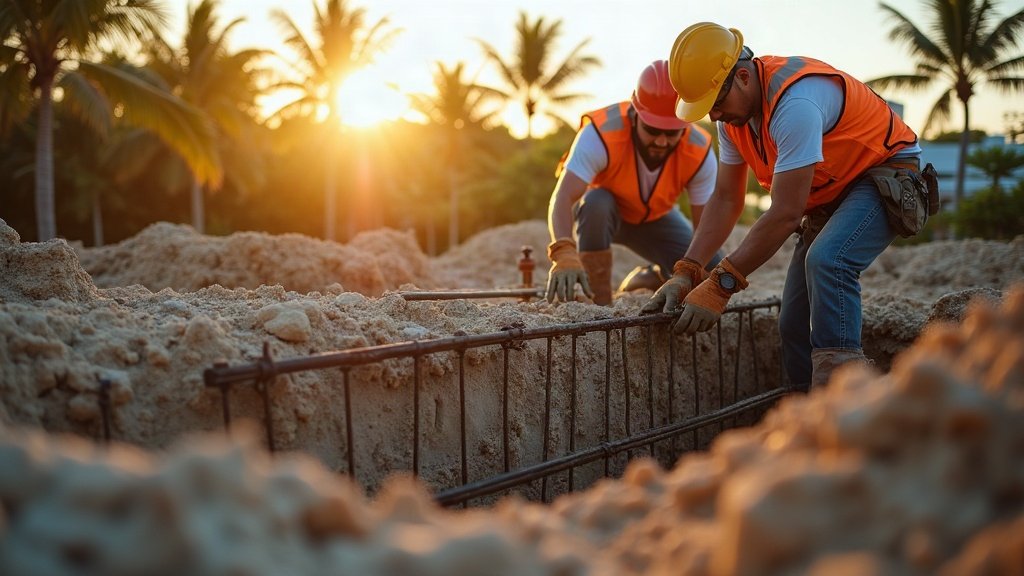
Foundation Stability in the Caribbean: Building on Shifting Ground in the Cayman Islands
In the Cayman Islands, where tropical conditions accelerate soil degradation and seasonal weather patterns test structural integrity, foundation stability represents one of the most critical yet underestimated aspects of construction. Property owners frequently discover that foundation problems—whether from subsidence, moisture infiltration, or salt-air corrosion of reinforcement—emerge years after completion, resulting in costly remediation and compromised safety. The challenge is compounded by our island’s unique environmental pressures: high humidity, intense hurricane seasons, and the logistical complexity of importing specialized materials and expertise.
Yet foundation failure is not inevitable. With proper site assessment, engineered solutions tailored to local soil conditions, and adherence to the Cayman Islands Building Code, developers and homeowners can build structures that endure the Caribbean climate for decades. Understanding how ground conditions affect your project—and acting on that knowledge early—is the difference between a resilient asset and a liability.
This guide explores the critical practices that ensure foundation stability in Cayman Islands construction, from initial soil investigation through long-term maintenance, helping you protect your investment against the environmental forces that threaten structural integrity across our islands.
What Foundation Stability Is and Why It Matters in the Cayman Islands
Foundation stability refers to the ability of a building’s base to maintain structural integrity, load-bearing capacity, and alignment throughout its lifespan. In the Cayman Islands context, this extends beyond standard engineering principles to account for our specific challenges: coral limestone soils with variable bearing capacity, groundwater fluctuations, salt-air corrosion accelerating concrete and steel degradation, and hurricane-force wind loads that place exceptional stress on foundational systems.
Poor foundation stability manifests as cracking, uneven settlement, moisture intrusion, and ultimately structural failure—problems that cascade through residential and commercial properties. For property owners, early foundation issues can render a building uninhabitable or unmortgageable. For developers, foundation remediation during or after construction can consume 15–25% of project budgets and delay completion by months. In hurricane season, a compromised foundation becomes a safety risk.
The Cayman Islands Planning Department and Building Code require that all structures be founded on stable ground with appropriate engineering analysis. This is not bureaucratic formality—it is the essential framework that protects lives and assets in our high-risk tropical environment.
Key Benefits of Proper Foundation Stability
- Structural longevity: A properly engineered foundation extends building lifespan by 30+ years, reducing the need for expensive repairs and preserving asset value through hurricane seasons and tropical weathering cycles.
- Safety compliance: Adherence to Cayman Islands Building Code standards ensures your structure meets regulatory requirements, facilitates mortgage approval, and protects occupants from catastrophic failure.
- Moisture control: Stable foundations with appropriate drainage and waterproofing prevent seepage that accelerates corrosion of reinforcement steel and interior decay, a persistent problem in humid Caribbean climates.
- Hurricane resilience: Engineered foundations designed for Cayman Islands wind loads and soil conditions keep structures anchored during extreme weather, protecting lives and avoiding post-storm remediation costs.
- Cost certainty: Upfront investment in proper site assessment and foundation engineering prevents surprises during construction, eliminates budget overruns, and avoids post-occupancy remediation that costs 3–5 times more than prevention.
- Insurance and lending approval: Properties with documented, code-compliant foundations qualify more readily for mortgage financing, insurance coverage, and favorable rates—critical for Cayman Islands real estate transactions.
Best Practices and Standards in the Cayman Islands
- Conduct comprehensive geotechnical investigation: Before design begins, hire a qualified geotechnical engineer to bore test holes, analyze soil composition, measure groundwater levels, and assess bearing capacity. This investigation, typically costing 2–5% of project value, prevents far costlier problems and is required by the Planning Department for most commercial and substantial residential projects.
- Tailor foundation design to local soil conditions: Cayman Islands soils vary from coral limestone to marl and clay. Your engineer must specify foundation type—shallow spread footings, driven piles, or caissons—based on site-specific soil strength, not generic standards. One-size-fits-all approaches fail here.
- Design for hurricane loads and storm surge: Foundations must accommodate not only static building weight but also lateral wind forces and potential flooding. Specify foundation anchoring and elevation per Cayman Islands Building Code requirements for your specific location and structure type.
- Incorporate salt-air corrosion protection: Use concrete mixes with low permeability, adequate concrete cover over reinforcement steel (typically 50–75mm for marine environments), and consider epoxy-coated or stainless steel reinforcement in high-corrosion zones near the coast.
- Implement robust drainage and waterproofing: Install perimeter drainage, sump systems, and membrane waterproofing to manage groundwater and rainfall infiltration. In Cayman Islands’ high-humidity environment, proper drainage is non-negotiable for long-term structural health.
- Document all foundation work and testing: Maintain records of geotechnical reports, concrete strength tests, inspection photos, and certifications. Documentation supports future maintenance, satisfies lender requirements, and provides evidence of code compliance for regulatory bodies.
Common Mistakes and How to Avoid Them
- Skipping geotechnical investigation to save costs: Many smaller projects proceed without soil testing, betting that neighbouring sites’ conditions apply. Cayman Islands soils are highly variable; one property’s stable coral limestone may adjoin another’s soft marl. Always test your specific site.
- Ignoring groundwater and drainage: Builders often underestimate Cayman Islands’ high water table and intense rainfall. Remedy: design foundation drainage systems as rigorously as you design the structure itself, and commission a drainage specialist if your site is near water or in a low-lying area.
- Using standard concrete without marine-grade specifications: Off-the-shelf concrete mixes do not provide adequate salt-air protection. Insist on concrete designed for marine environments, with specified water-cement ratios and admixtures proven in Caribbean conditions.
- Underestimating hurricane design loads: Older foundations designed 20+ years ago may not meet current Cayman Islands Building Code wind-speed requirements. When renovating or expanding, verify that existing foundations can carry additional loads and lateral forces.
- Cutting corners on concrete curing and quality control: Poor curing in hot, humid Caribbean weather reduces concrete strength and increases permeability. Ensure your contractor monitors moisture, temperature, and curing time, and requires strength testing before load application.
- Neglecting long-term inspection and maintenance: Once built, foundations are often forgotten until crisis hits. Establish a maintenance schedule: annual visual inspections, professional assessment every 5–10 years, and prompt repair of cracks or seepage.
Verification Checklist
- Confirm that a licensed geotechnical engineer has completed a site-specific soil investigation and that findings are documented in a written report.
- Verify that foundation design is sealed by a Professional Engineer registered in the Cayman Islands and that design accommodates local soil conditions, hurricane loads, and drainage requirements.
- Check that concrete specifications reference marine-grade mixes suitable for salt-air environments and that concrete strength testing has been performed and documented.
- Confirm that drainage and waterproofing systems are installed per design and have been inspected before backfill or occupancy.
- Obtain final inspection sign-off from the Planning Department or your Building Inspector confirming code compliance.
- Retain all geotechnical reports, engineering drawings, test results, and inspection records for your property file—essential for future maintenance, insurance, and resale.
Applications and Use Cases in the Cayman Islands
- Residential developments on Seven Mile Beach and other coastal areas: High-value residential projects require specialized foundation design to withstand salt-air corrosion, storm surge, and hurricane winds while maintaining long-term marketability and insurance eligibility.
- Commercial and retail centers in George Town: Multi-story commercial buildings demand deep geotechnical investigation and engineered foundation systems that accommodate urban load concentrations and ensure tenant safety and lender confidence.
- Hospitality and resort expansion: Hotels and vacation properties built on variable Cayman Islands soils benefit from early geotechnical assessment and robust foundation design that protects guest safety and operational continuity through hurricane seasons.
- Government and institutional facilities: Schools, medical facilities, and government buildings require foundation stability and resilience to ensure public safety, service continuity, and compliance with regulatory standards for critical infrastructure.
- Renovation and adaptive reuse projects: Upgrading older structures often reveals foundation weaknesses. Professional assessment allows developers to remediate issues, strengthen foundations for additional loads, and extend building lifespan safely.
- Properties in flood-prone or low-lying areas: Developments on North Sound properties, coastal mangrove zones, or areas historically affected by flooding demand elevated foundations, specialized drainage, and engineered resilience to storm surge and water infiltration.
How J&R Construction Approaches Foundation Stability
At J&R Construction Ltd., we view foundation stability as the non-negotiable bedrock of every project—literally and figuratively. Our approach begins before any shovel enters the ground: we partner with qualified geotechnical engineers to investigate site conditions thoroughly, understand Cayman Islands soil behavior, and design foundations that endure. Our team has completed residential and commercial projects across Grand Cayman, and we’ve learned that the investments made early in foundation planning—thorough testing, marine-grade specifications, professional engineering—pay dividends in durability, safety, and client confidence.
We specify concrete mixes proven in Caribbean salt-air environments, oversee curing with discipline matched to our tropical climate, and maintain rigorous quality control and testing throughout construction. Our site managers understand that hurricane season is not theoretical; every foundation must be built to protect occupants and preserve value through the worst weather Cayman Islands can deliver. From modest residential renovations to substantial commercial builds, J&R Construction treats foundation stability as the signature of craftsmanship and the measure of responsibility to our clients and community.
Conclusion
Foundation stability in the Cayman Islands is not a luxury consideration—it is the essential investment that separates sound, long-lasting structures from costly failures. By conducting proper geotechnical investigation, designing for local soil conditions and hurricane loads, specifying marine-grade materials, and implementing robust drainage and maintenance practices, property owners and developers protect their assets, ensure occupant safety, and comply with regulatory standards.
If you are planning a residential renovation, commercial development, or substantial construction project in the Cayman Islands, the time to focus on foundation stability is now—during design and planning, not after settlement cracks appear. Contact J&R Construction Ltd. today to discuss your project’s foundation requirements and discover how our professional expertise and commitment to Caribbean construction best practices can ensure your structure stands strong for generations.
>
Leave a Reply